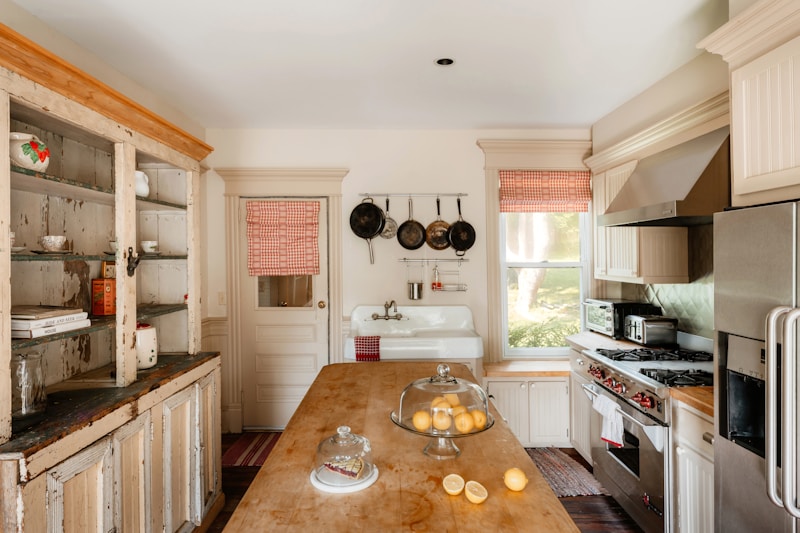
The kitchens I keep returning to, in photographs and in person, share a quality that has nothing to do with budget. They look inhabited. A farmhouse kitchen in Provence or Umbria was never designed in the way we use that word now. It accumulated. A long table, a good stove, open shelves holding the plates that survived. The style Americans chase under the name farmhouse is really just evidence of use, and that is both harder and cheaper to achieve than a renovation.
Think unfitted
The signature of a true European kitchen is that it is not fully built in. Instead of an unbroken run of matching cabinetry, there is furniture. A freestanding hutch. A work table with turned legs instead of an island with waterfall stone. If you are renovating, leave one wall free of uppers and let a single antique piece do that work. If you are only styling, the move is the same on a smaller scale: replace one bank of closed storage with something that stands on its own feet.
Choose materials that keep score
Marble etches. Unlacquered brass darkens where your hand lands. A wood counter collects knife marks near the sink and nowhere else, a little map of your habits. This is the whole point. Farmhouse kitchens are warm because their surfaces record time instead of resisting it. If you want the look, you have to give up the fight for pristine, and choose zellige over rectified porcelain, honed stone over polished, and finishes that promise to change.
The discipline of open shelves
Open shelving fails when it becomes a display case. It works when it obeys one rule: nothing lives there that you do not use weekly. Everyday plates, drinking glasses, the two bowls you actually reach for, olive oil within arm's reach of the stove. Use runs out of ceramic and glass; keep plastic and packaging behind doors. The shelf stays beautiful because your own routine keeps it honest, and a stack of slightly mismatched white plates will always read better than a styled vignette.
What to skip
Skip anything with words on it. Skip factory distressing, which reads as costume the way real wear never does. Skip the matching canister set purchased in one afternoon. Old kitchens were assembled over years by people who were not trying to achieve a look, and the fastest way to miss the point is to buy it all at once. Add one real thing at a time, cook constantly, and let the room age in your care. That is the entire trick, and no one can sell it to you.
Thalia